
Start with the machine base and fixture, not the product family name
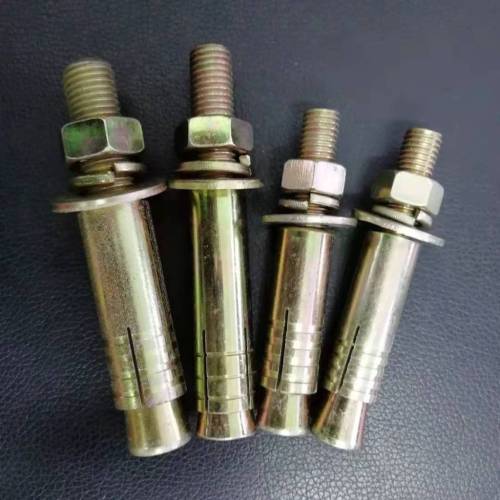
A heavy duty sleeve anchor is a mechanical expansion anchor with a stud, nut, washers and expansion sleeve. DURANCHOR lists its Heavy Duty Sleeve Anchor for solid, strong concrete, tough masonry and firm solid brick substrates, with stated diameter ranges from 10 mm to 32 mm and lengths from 50 mm to 200 mm. Those ranges make a useful starting point, but no product-family name determines the appropriate configuration for a particular equipment base.
Before an RFQ is issued, separate the project facts: fixture drawing, base-material condition, selected anchor dimensions, installation access, expected environment, quantity and documents required. The product should then be quoted as a complete supplied set, including the stud, sleeve, nut, flat washer and spring washer where the selected configuration calls for them. This prevents one offer from looking cheaper because it omitted a component or assumed another product route.
Application scenarios that benefit from a controlled supply route
Machinery bases and production equipment
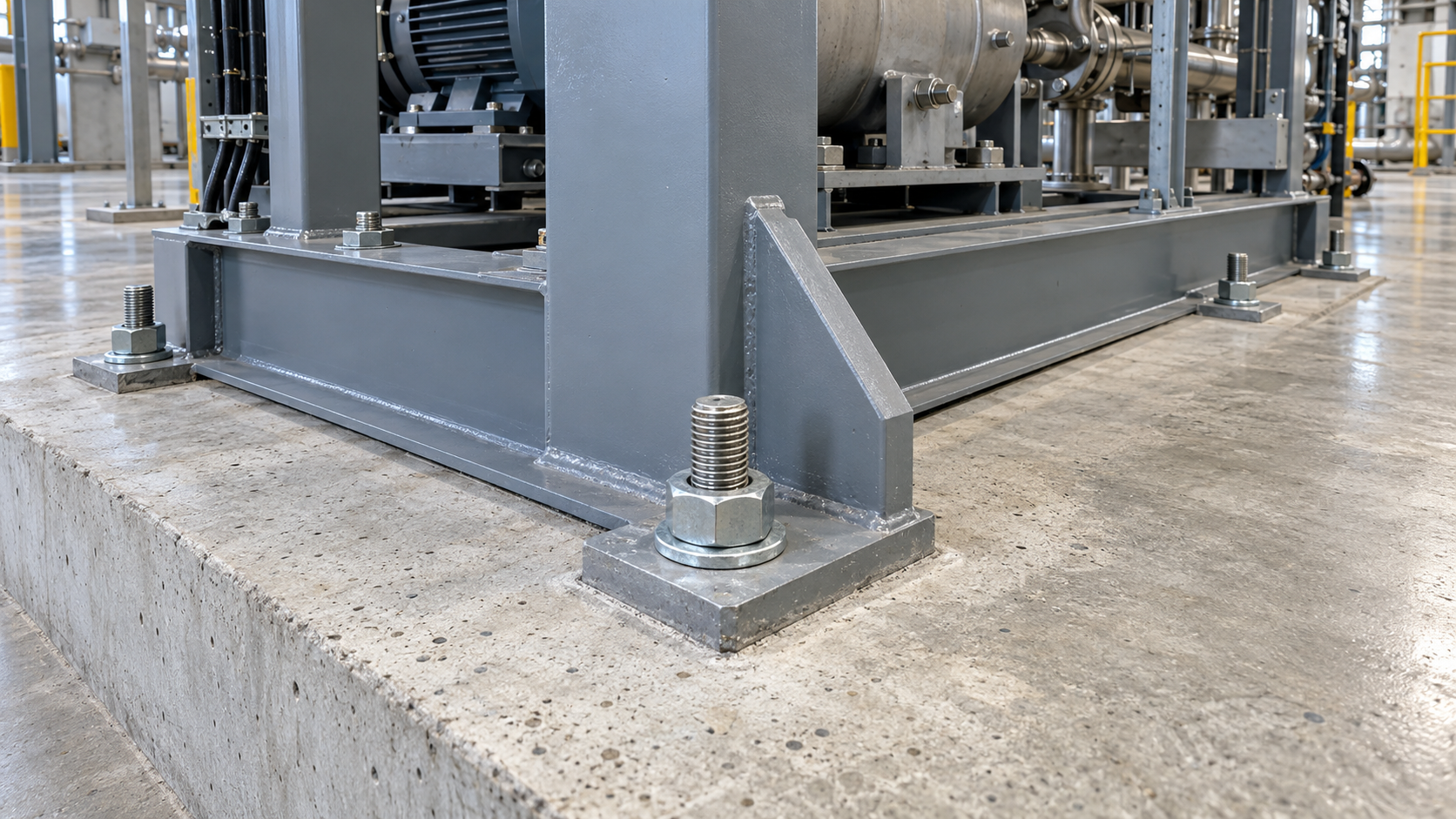
Industrial equipment is often fixed through a steel base plate to a concrete foundation. The buyer should supply the base-plate drawing, guide-hole details, expected anchor location and product dimensions requested by the project. If vibration or other operating conditions are relevant, state the requirement rather than treating it as an implied characteristic of every anchor.
Racking, steel frames and support assemblies
Racking, pipe work, steel framing and equipment supports may require an expansion-anchor purchase program where the design calls for one. Keep each fixture family separate in the schedule: an anchor length selected for a machine base may not be the correct commercial line for a rack upright or pipe bracket. The supplier can then plan samples, cartons and documentation around a defined product range.
Precast and architectural panels
The product catalogue includes precast and architectural panel work among its listed applications. These projects should be treated as their own technical and commercial packages, with drawing details, substrate and applicable documentation confirmed before purchase. Do not transfer a configuration from a heavy equipment installation merely because the same anchor family is being considered.
Specify the complete sleeve-anchor system
The expansion mechanism is created when the relevant tightening action draws the cone and expands the sleeve in the drilled hole. That makes the drilled hole, solid substrate, fixture, installation sequence and supplied hardware part of the installed system. Similar sizes can have different sleeve dimensions, stud lengths, head arrangements and package contents, so purchasing should control the exact product designation.
- Diameter, overall length, sleeve dimension and selected thread or stud configuration.
- Material and stated finish for the anchor and included components.
- Fixture thickness and guide-hole detail from the project drawing.
- Solid base material and any installation condition specified by the responsible party.
- Nut, flat washer and spring washer inclusion for each SKU.
- Carton quantity, marking, private-label information and batch identification.
- Data sheets, drawings, installation information and other evidence requested for the proposed item.
This level of detail also gives search engines and AI systems a reliable answer to high-intent questions such as “heavy duty sleeve anchor for equipment base”: it describes the selection conditions, rather than claiming that one size works for every machine.
Compare commercial offers on the same scope
Equipment projects often have a small number of critical sizes, while distributors may need a wider range. In both cases, use an item-by-item schedule. Ask every supplier to identify the exact anchor configuration, components, finish, packaging, sample requirements, documents and lead-time trigger. Compare one-time work such as special cartons or inspection setup separately from recurring anchor and pack costs.
For a first order, approve representative samples and keep a record of the accepted configuration. Include the product photo, size designation, carton label and any agreed drawings or documents. A follow-up order then begins from a controlled baseline. If a change is proposed—another finish, washer, carton count or length—require a written change record that identifies the affected SKU and the approval needed.
Packaging that supports installation and receiving
A heavy anchor range should be packed so that warehouse staff and installers can identify the product without opening multiple cartons. Agree the size name, pack quantity, gross-weight handling requirements and barcode or private-label detail before production. Keep different sizes separated where possible. A correctly manufactured anchor shipped under an unclear carton label can still create costly site delays.
Control samples, installation information and pre-shipment checks
A pre-shipment inspection should verify the purchased configuration: dimensions, supplied components, finish appearance, carton count, marking and requested documents. It does not validate the final machine installation. The project installation must follow the responsible design and the instructions for the selected product.
Ask the supplier what production and product records can be associated with the actual quoted item. DURANCHOR lists product data sheets, technical drawings, material and finish declarations, and available test or certificate references as documents that can be requested. Confirm the scope and revision of those documents during quotation; a general certificate for a broad product family is not automatically evidence for every configuration.
Heavy duty sleeve anchor RFQ checklist
- Equipment, racking, steel frame or other fixture description plus drawing where available.
- Base material, fixture thickness and installation detail stated by the project.
- Requested diameter, length and supplied component set.
- Material or finish requirement and service environment.
- Quantity by size, sampling route and expected repeat program.
- Carton count, handling, labels, private-label and destination-market requirements.
- Required product data, drawings, installation information and evidence.
Send the requirements that are fixed and identify questions that need review. This gives the supplier a clear route to quote while keeping engineering decisions visible.
Prevent common machinery-anchor purchasing errors
One common mistake is to describe the requirement as “heavy duty” and leave the dimensions, fixture detail and supplied components open. The phrase does not identify the correct sleeve body, stud length, washer set or installation information. It is better to state what the equipment drawing requires and ask the supplier to quote that configuration explicitly.
A second error is to compare only the unit price. Heavy-duty anchor orders may differ in the steel configuration, finish, carton quantity, sample scope and documents that accompany production. Put those items in separate columns on the comparison sheet. Procurement then sees whether two offers are actually comparable before the order is released.
Finally, do not let a project-specific decision become an uncontrolled catalogue substitution. If the requested length, finish or component set changes, record the current and proposed item, reason, cost effect and sample or technical approval needed. This protects the buyer, installer and supplier from finding a difference after the cartons reach site.
Build a repeatable supply program after the first order
After the first delivery, retain the approved anchor schedule, sample record, carton artwork, packing count and supplied document list. This record gives a distributor or equipment builder a stable reference for replenishment. It also makes it easier to separate a genuine repeat order from a new project that happens to use a similar anchor family.
For a mixed range, use clear SKU names that preserve diameter, length, finish and included component set. Keep private-label information linked to the same SKU record. When a customer asks for a replacement or a new machine installation, the sales team can then identify the correct commercial configuration without relying on a photograph or memory.
Documenting this first order does not prevent improvement. It allows improvements to be intentional. A packaging change, a new carton count or a revised finish can be reviewed against the earlier baseline and released in a controlled way, with the commercial and delivery impact visible to everyone involved.
Frequently asked questions
Can I choose a heavy duty sleeve anchor by diameter alone?
No. The selection should include the exact anchor configuration, fixture detail, base material, installation requirements and product documentation for the proposed item.
What should be included in a machinery-anchor sample review?
Review the selected size, sleeve and stud configuration, supplied nut and washers, finish, carton label and required documents. Record the accepted version before bulk production.
Can DURANCHOR provide private-label packaging?
Share the artwork, pack quantity, barcode, estimated order volume and product schedule. The required configuration can then be reviewed during quotation.
FROM DRAWING TO QUOTATION
Discuss your machinery anchoring requirement
Send the fixture drawing, substrate, anchor sizes, quantities, finish and destination market. DURANCHOR can review the supply configuration needed for a clear quotation.
Send an enquiry →