
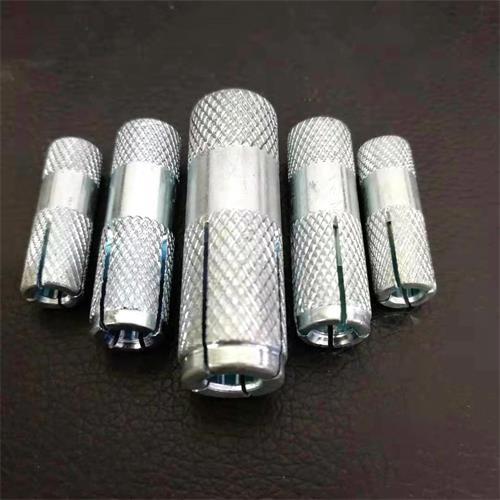
Define the internal-thread system before requesting a price
A concrete drop-in anchor is an internally threaded mechanical expansion anchor. It is selected so that a bolt, threaded rod or other compatible threaded fastener can be fixed after the anchor body is installed. That flexible connection is valuable for MEP supports, but it also means that the thread standard and installation method must be part of the order definition.
DURANCHOR lists Concrete Drop-In Anchors in carbon steel and stainless-steel options, with metric, UNC and British thread variants described on the product page. The product is intended for solid substrates such as concrete, masonry and stone, and it requires a suitable setting tool. The selected configuration, substrate and product documentation should always be checked against the project requirement.
Use cases in MEP support work
MEP installations frequently need a connection point above or beside the installed service. Drop-in anchors can be considered where the design calls for an internally threaded anchor in a suitable solid substrate and the threaded rod or bolt is selected as part of the support arrangement. Typical enquiries may concern pipe-support trapezes, cable tray, trunking, equipment support or temporary construction attachments. The anchor itself does not establish the capacity of the whole support system; the project design and the documentation for the exact product control that decision.
Pipe and conduit supports
For pipe or conduit runs, the buyer should identify the support type, rod thread, substrate, location and the number of fixing points. It helps the supplier prepare a consistent size schedule and identify whether setting tools should be packed with the anchors. Keep different support designs on separate lines if they use different thread standards or environmental requirements.
Cable tray and trunking
Cable-support installations can have repeated brackets and hanger positions, which makes them suitable for a controlled SKU program. Give the supplier the required rod or bolt thread, the expected pack-out and any label language needed by the electrical contractor or distributor. If the installation is in a corrosive or wet environment, describe the actual exposure rather than requesting an undefined “outdoor grade.”
Equipment and service-room accessories
Equipment rooms may include brackets, light ancillary frames or service supports where the project specifies a solid-substrate anchor. Do not transfer a general MEP product list directly into a load-critical application. Separate the project’s technical requirement from the commercial range and ask for confirmation of the documents available for the exact proposed item.
Specify the setting tool as part of the order
A drop-in anchor is installed by drilling the required hole, placing the anchor body flush and using a setting tool to drive the internal conical plug. The setting tool is therefore not an optional afterthought when the purchase is intended for a new installation team or a distributor starter kit. The matched tool should be named by size in the order schedule.
The existing Drop-In Anchors and Setting Tools guide explains why internal thread size alone does not prove that two anchors or tools are equivalent. For each anchor line, identify the proposed anchor model, thread, body diameter, installation information and corresponding tool. Ask whether the tool is supplied individually, per carton or as a separate line item.
Questions to resolve before release
- Which drilled-hole diameter and depth are specified for the exact anchor?
- Which setting tool is matched to the proposed size and is it included?
- How will the anchor be identified once it is packed with similar-looking sizes?
- Are thread standard and rod or bolt standard written in the same schedule?
- Which installation instructions and product records must accompany the order?
Build a commercial schedule for a mixed-size range
Stock programs commonly contain M6, M8, M10, M12 and larger sizes, or their selected imperial equivalents. Each line should show the internal thread, anchor body diameter, anchor length, material or finish, quantity, carton count and setting-tool requirement. The DURANCHOR product page lists sizes from smaller metric and inch formats through larger internal-thread variants; request confirmation of the exact range that will be quoted.
Keep the terminology consistent across the quotation, carton, product list and purchase order. “Drop-in anchor,” “metal expansion nut” and “internally threaded anchor” may be used in commercial conversation, but the SKU line should settle on one clear designation plus the key dimensions. This makes receiving and customer service much easier after delivery.
Sample and packaging review
Request a sample set containing the anchor, matched tool and a clear label for the sizes that will make up the initial order. Check that the carton count, inner packaging and product description allow a warehouse team to separate M8 from M10 or one thread system from another. For private-label work, approve the carton artwork and barcode against the same master schedule.
Control installation information and pre-shipment quality
The purpose of a pre-shipment review is not to substitute for field installation or project design. It is to make sure the received commercial configuration matches the approved one. Verify anchor size, internal thread, finish, carton count, label and any requested setting tools. Retain samples or photographs of the agreed product and package if the order will be repeated.
If a factory proposes a material, thread, tool or packing change, treat it as a documented variation. The variation record should identify the affected SKU, reason, visual or functional difference, cost effect and whether a replacement sample is needed. This gives the buyer a reliable way to control changes between the first order and replenishment.
Drop-in anchor RFQ checklist for MEP buyers
- Support application: pipe, cable tray, trunking, bracket, equipment or another defined fixture.
- Solid base material and any project installation requirement.
- Internal thread standard and the compatible rod or bolt requirement.
- Anchor size and quantity by SKU.
- Carbon steel, stainless steel or stated finish requirement.
- Setting-tool size and whether tools must be included.
- Carton count, label, barcode, private-label and destination-market requirements.
- Required drawings, product data or other documents for the proposed item.
A complete brief lets the supplier distinguish a stocking program from a project-specific purchase and identify gaps before it returns a price.
Prevent common drop-in anchor sourcing errors
The easiest error is to order internally threaded anchors without clearly naming the mating thread. The anchor, threaded rod, bolt and setting tool should be visible in one controlled schedule. Do not rely on a general description such as “drop-in anchor M10” if the order also contains an alternate thread standard or a matching rod program. Distinguish them line by line, and keep the carton label aligned with the purchasing designation.
A second error is treating the setting tool as a workshop accessory rather than a matched product. An installation team that receives anchors without the corresponding tool, or with a tool intended for a different size, can lose time before the first support is fitted. Put tools into the quotation as their own line item and agree how they will be packed, labelled and replenished.
Finally, do not use a product range for MEP supports as a proxy for the complete support-system design. The anchor product, rod, channel, clamp, bracket, substrate and loading requirement all need their own project review. A sourcing guide helps the buyer obtain a consistent product package; it does not replace the responsible party’s design and installation decisions.
Create a stable support-hardware program
MEP buyers often benefit from a short, controlled core range instead of numerous overlapping SKUs. Begin with the rod threads and anchor configurations that occur most often in the target market, then document the carton quantity and matched setting tool. When a project requests a special size, handle it as a separate documented line rather than adding an ambiguous substitute to the stock schedule.
For commercial comparisons, keep one-time and recurring items separate. A first order might include sample preparation, specialised labels or a set of tools. Repeat orders may only require anchors, cartons and agreed documentation. Separating these elements allows procurement to compare the true launch cost with the later replenishment price.
Preserve a post-delivery record: final product schedule, sample photos, carton artwork, supplied document list and inspection observations. If a customer later requests the same anchor for a new pipe-support or cable-tray program, the buyer can begin from an approved baseline rather than starting the identification process again. This also gives the manufacturer a clear point of reference when it receives the next RFQ.
Frequently asked questions
Can a drop-in anchor accept any threaded rod with a similar diameter?
No. Confirm the exact thread system and the product documentation for the selected anchor. A nominal diameter by itself does not prove compatibility.
Should setting tools be included in a distributor order?
Include them when the target customer or installer needs them. List the matched tool by size as a separate, traceable order line or a stated carton inclusion.
Can drop-in anchors be used in every wall material?
No. The product page identifies solid substrates such as concrete, masonry and stone. The project requirement and the product documentation determine whether a specific installation is suitable.
FROM APPLICATION TO QUOTATION
Discuss your product requirement
Send the threaded-rod or bolt sizes, solid substrate, support type, quantity by SKU, setting-tool requirement and destination market. DURANCHOR can review the configuration for quotation.
Send an enquiry →